An interview with Jennifer Sawyer, HSD Teaching & Learning Coordinator
This article is part one of a three-part series focused on early learner literacy instruction in Hockinson School District. In this Q&A, Jennifer Sawyer shares how Hockinson School District has updated its elementary reading program to align with current research on how students learn to read.
Part two will provide an update on student progress, including March 2026 literacy assessment results when they become available. Part three will look ahead at how early reading skills prepare students for success in middle and high school across all subject areas.
Q: What’s new about reading instruction in Hockinson?
Jennifer Sawyer:
We recently updated our elementary reading program at Hockinson Heights to better match what research says about how kids learn to read. Up-to-date curriculum in each grade level builds on the last, so students don’t miss important steps.
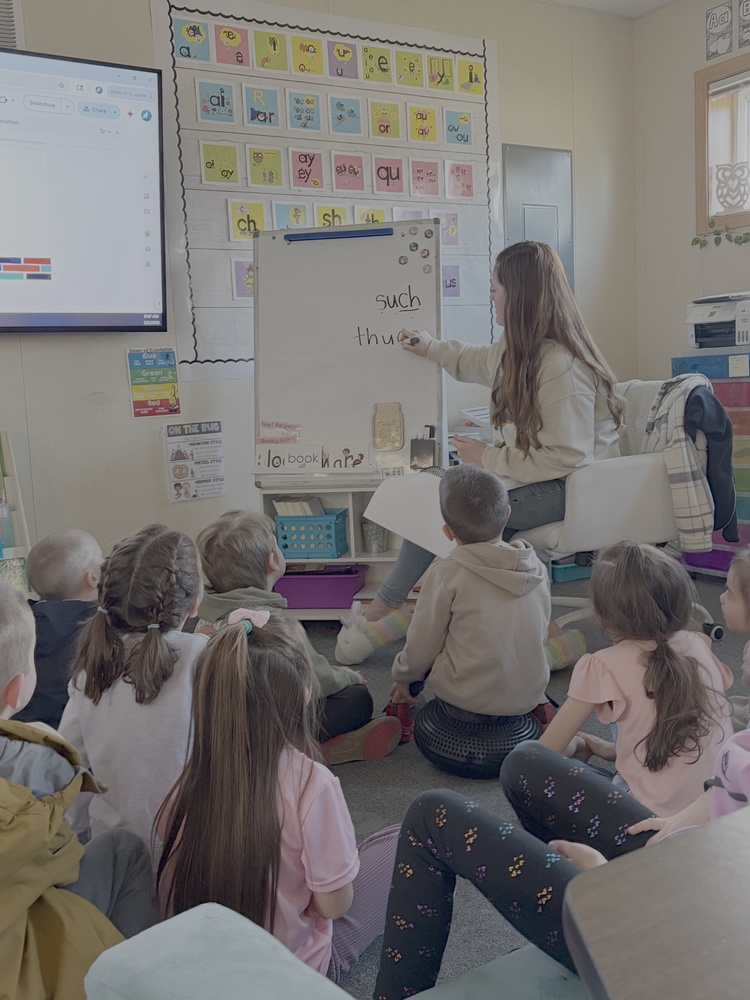
Our elementary school teachers are focusing more strongly on phonemic awareness, phonics, fluency, vocabulary, and comprehension so that students are prepared with the building blocks of literacy and can become proficient readers by the time they enter third grade.
We now have a clear plan for reading goals at each grade level, and these build as students progress from grade to grade.
Q: What are the five pillars of early literacy?
Jennifer Sawyer:
Early literacy pillars in grades kinder through second help students unlock the code to reading and become proficient readers by the end of second grade. As their skills build, they are also becoming more fluent readers.
In grades kindergarten through second grade, students develop phonemic awareness, handwriting, phonics, vocabulary, and comprehension skills. Each of the core pillars must be in place to support comprehension, which opens doors for deeper engagement in middle and high school.
Phonemic awareness: This is the ability to hear, distinguish, produce and change sounds in spoken words. It includes identifying individual letter sounds, blending sounds together to make words, segmenting words apart into their individual sounds, and then swapping sounds for others, as in changing the /b/ in bat to /m/ to make mat.
Handwriting skills: Kindergarteners and first graders work on handwriting skills. Handwriting strengthens letter recognition, supports retention of letter shapes and sounds, and fosters automaticity that allows students to focus on higher-level writing skills and to read texts more fluently.
Phonics: This is a progression of learning that helps students recognize the association between the sounds that they hear (phonemic awareness) and the letters on a page (what they see). Phonics instruction includes everything from letter identification in kindergarten to building basic consonant vowel consonant words like dog. That continues in first grade with more complex word types and moves to recognizing and reading multi-syllabic words like fan-tas-tic by second grade. This progression advances at the upper elementary grades (3-5) to recognizing prefixes, affixes, root words, and greek and latin roots.
Vocabulary: Students develop language comprehension and word attack skills for unpacking new words. Teachers select words that help students understand the text and content meaningfully. They teach strategies for tackling unknown words and making sense of them using the building blocks that we’ve learned through phonics development and in using the context of a given text.
Comprehension is the ultimate goal and final pillar. The goal of all reading instruction is for students to understand and make sense of what they are reading. Comprehension strategies include understanding the problem and solution in the story, talking about the characters, determining the main idea, asking and answering questions, inferring meaning, and so on.
Q: How do Hockinson educators support students who may need extra help with reading?
Jennifer Sawyer:
Our core belief is that every student can learn to read with the proper instruction and then use those skills to access higher levels of course work.
Students who are emerging in their development of reading skills have several levels of support at HHES. All students receive core instruction in the skills necessary to attain the five core pillars of literacy proficiency.
Teachers routinely review student data to determine who may need additional instructional support to close any gaps in their reading skill development. Classroom small group sessions 3-4 times per week help to build missing literacy skills and get on track.
Some students may require another layer of support through the Learning Assistance Program (LAP). This is a state funded program to support students who are not yet meeting state standards in reading. Other students may also receive additional reading support through their Individualized Education Plans. The goal is to adjust support levels as students take tests and demonstrate new skills.
Q: How is the new reading program working so far?
Jennifer Sawyer:
While we don’t have all of the testing data for this school year yet, early progress data is looking great! The percentage of students that test below grade level continue to shrink as student reading proficiency skills increase. We are so proud of how hard our students and teachers are working. Their efforts are showing great payoffs already!
Here are some examples:
I can’t wait to see their scores for the screening assessments given in March.
Q: How can families support reading at home?
Jennifer Sawyer:
Families are critical partners in their children’s literacy development. There are many things families can do at home to support their child’s development:
Read to and with your child: Begin as early as possible and continue through elementary school. Pictures books are great for all elementary students. Students as young as first grade also enjoy listening to chapter books that the family is engaging in together. This builds a love of reading, stamina for attending to a task for longer and longer periods of time, and encourages the brain to hold on to the story for longer than one sitting. This is amazing for building recall skills.
Talk about the books that you read together or that your child is reading on their own or in school. Ask questions, share what you think might happen next, or discuss words your child may not know.
Take your child to pick out books at the library or book store. Set a time for daily reading.
Sing songs and play rhyming games together. This helps with the development of phonological and phonemic awareness skills- training the ear to hear and play the sounds in words.
Practice letters, letter sounds, and high frequency words that your teacher may send home.
Talk together often about all kinds of topics. A child’s vocabulary grows through rich conversation with others. Speak in full sentences and use words your child may not know yet.
Do puzzles, play with playdough, build with legos: Each of these helps to develop the many muscles in the hands. Ultimately, this supports students to develop a strong and proper pencil grip for writing.
Make up stories together, talk about what you see all around you and in nature, and have fun!
Model a love of reading by reading for yourself!